Both dealers and property managers on a Remote Management site are able to move out tenants.
To get started, navigate to https://aiphone.cloud/remotemanagement and log in with your credentials, including the branch's IXG Portal account, if prompted. If multiple sites are displayed, click the desired site from the list.
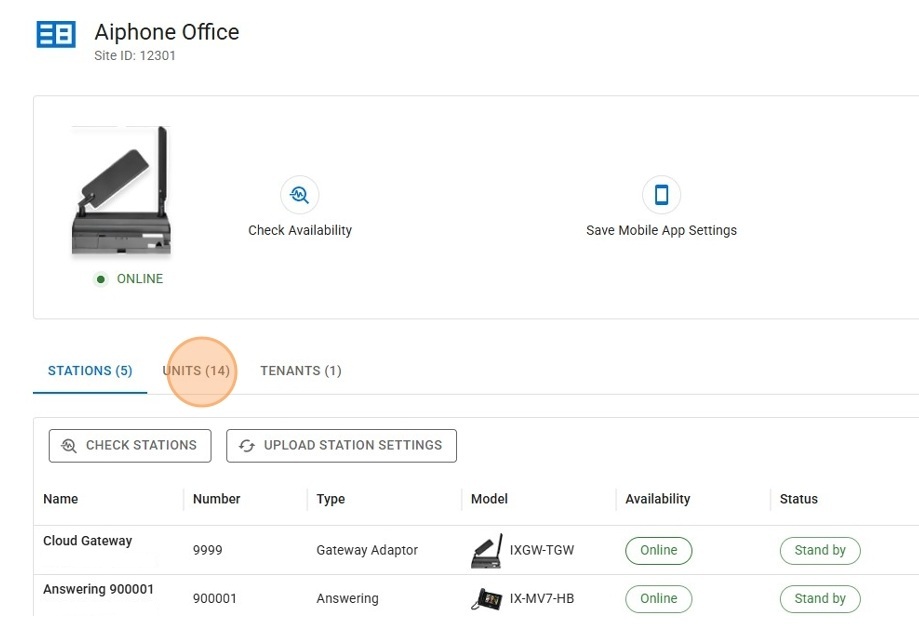
On the Site Detail page, click Units to display the unit list.
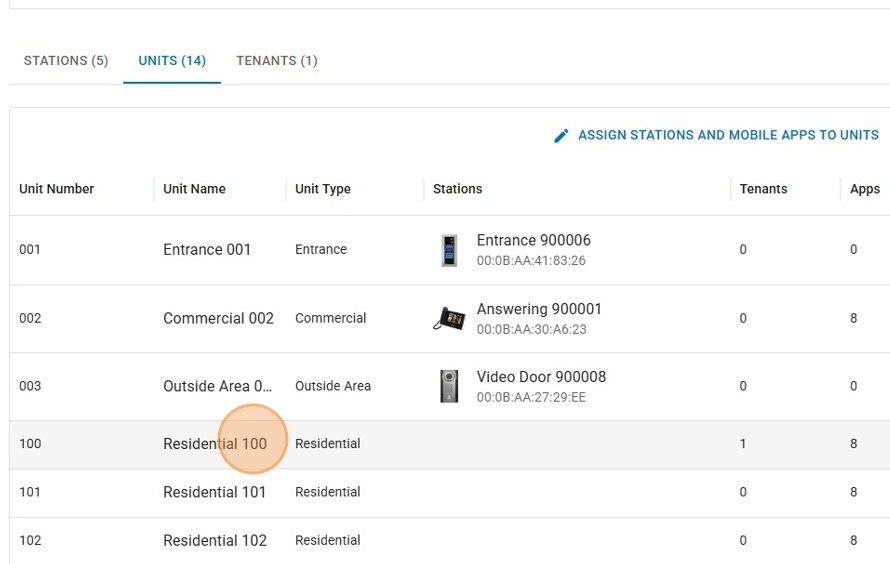
Click a unit from the list. This will open up a new page.
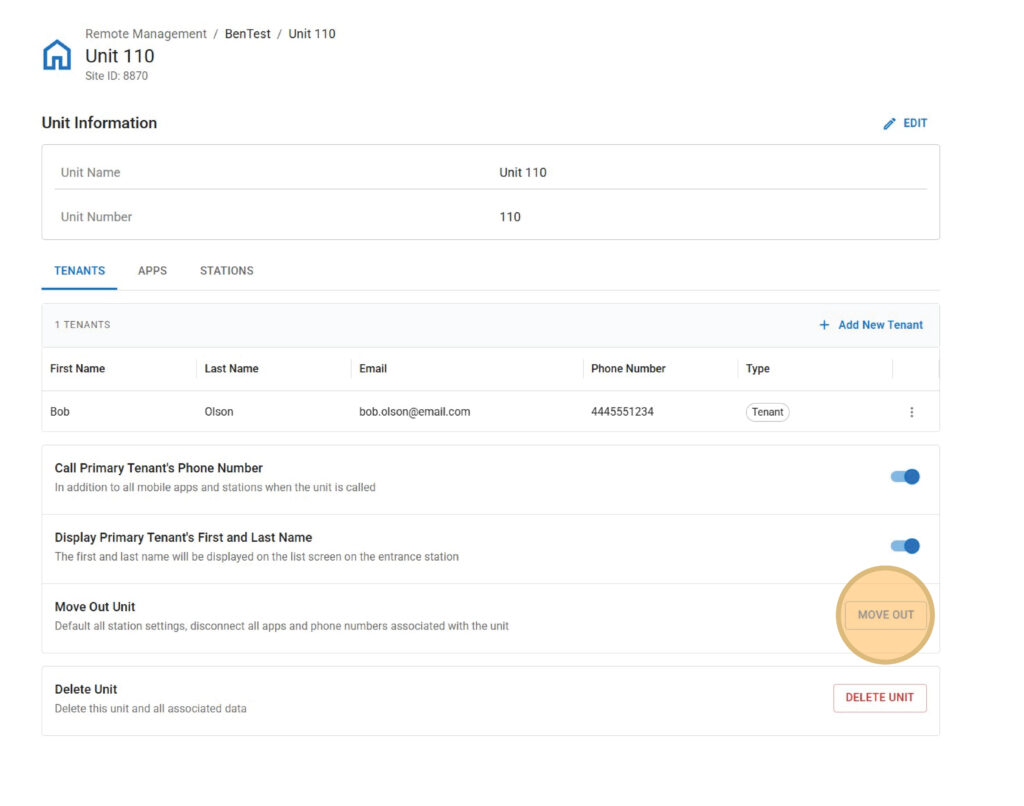
Under the Tenants submenu, the site’s tenants will be listed. Click Move Out.
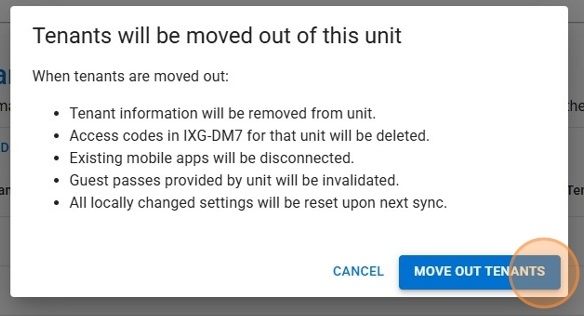
A pop-up window will appear, explaining what information will be lost once the tenant is moved out. Click Move Out Tenants to confirm.
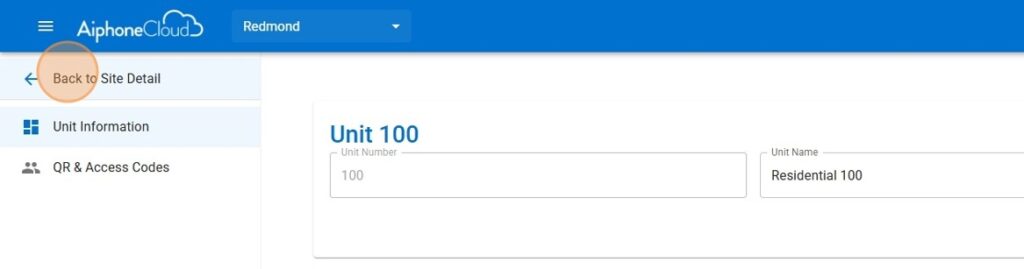
This will remove the tenant from Remote Management, but the settings will need to be applied to the IX | IXG Series stations. Click Back to Site Detail.
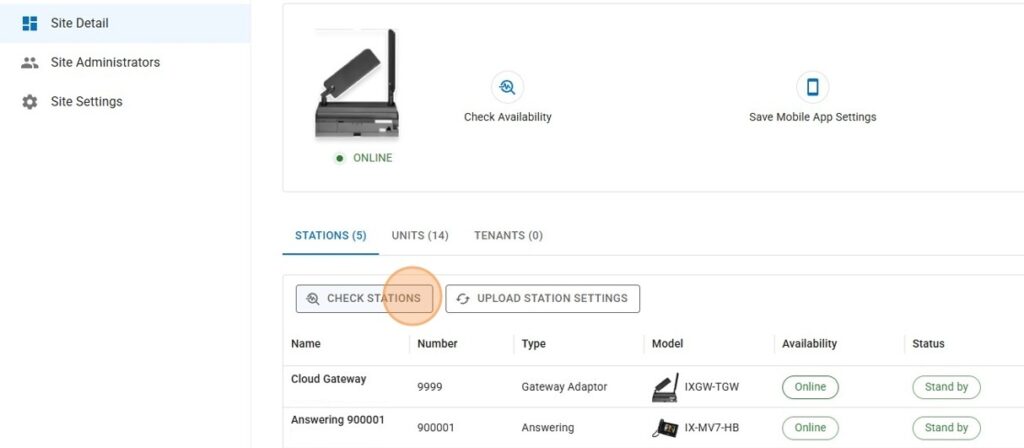
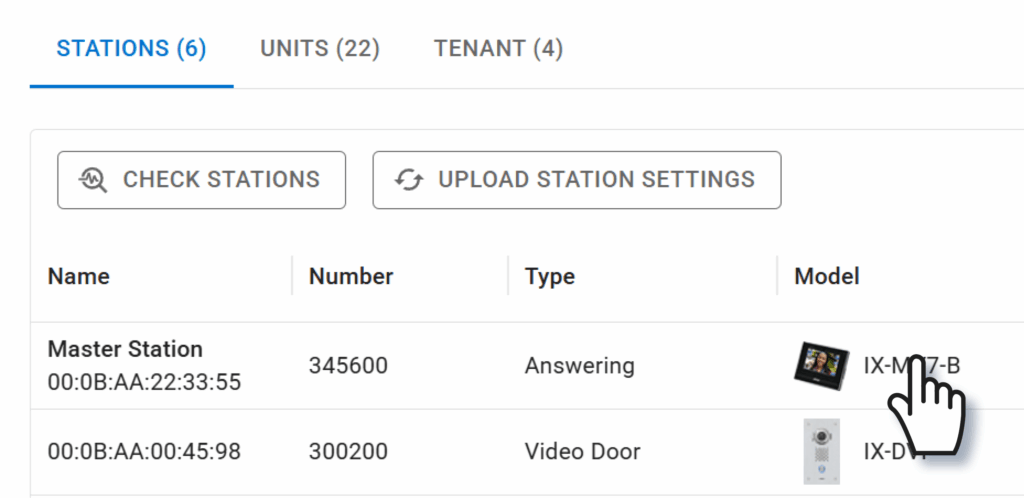
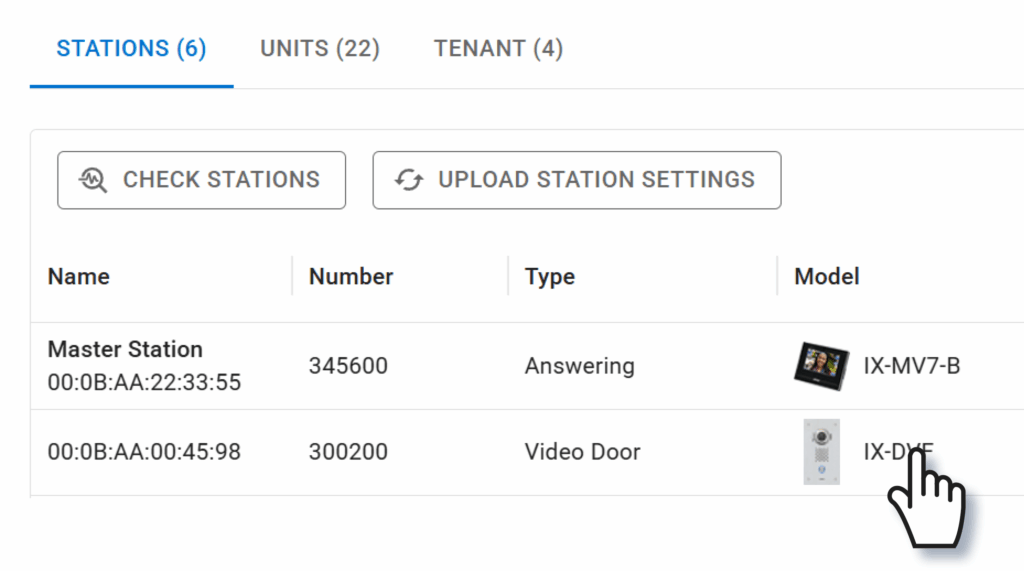
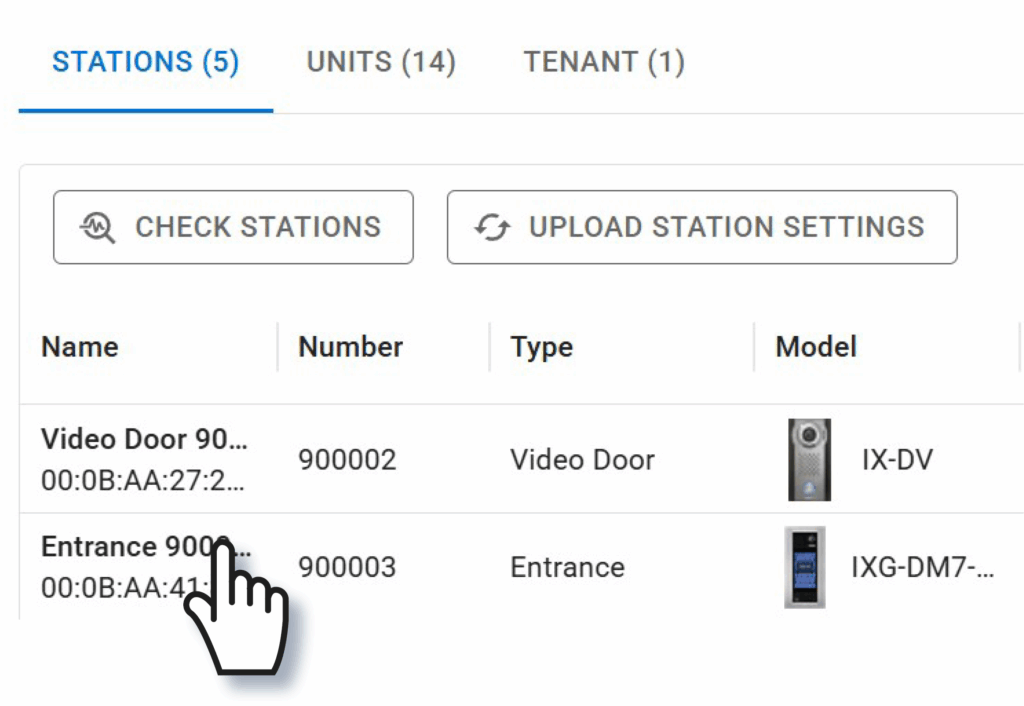
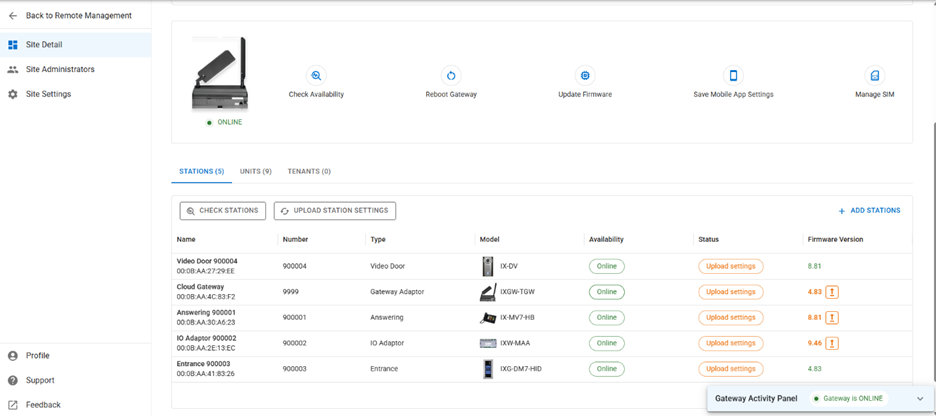
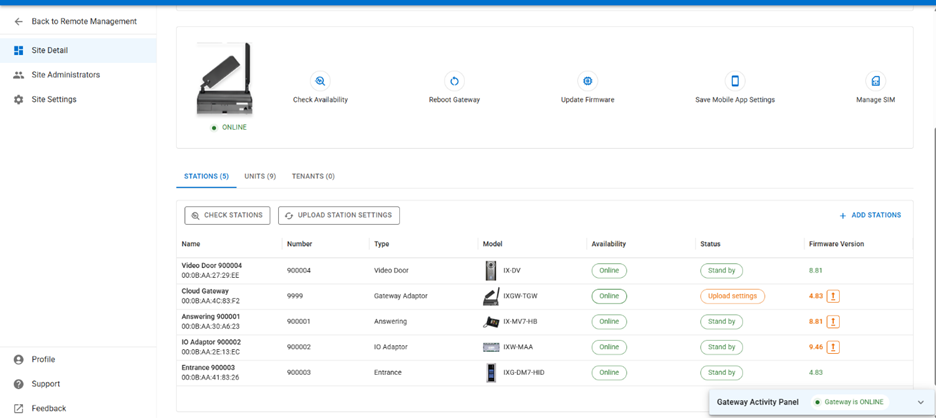
Click Check Stations to confirm that the stations are online and able to be accessed by AiphoneCloud.
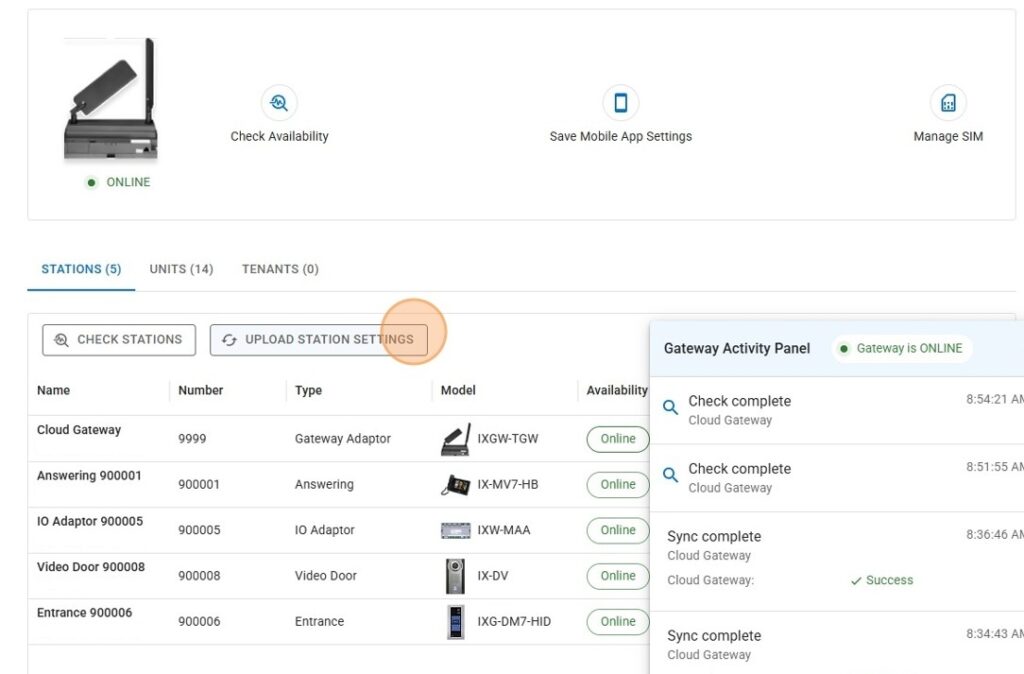
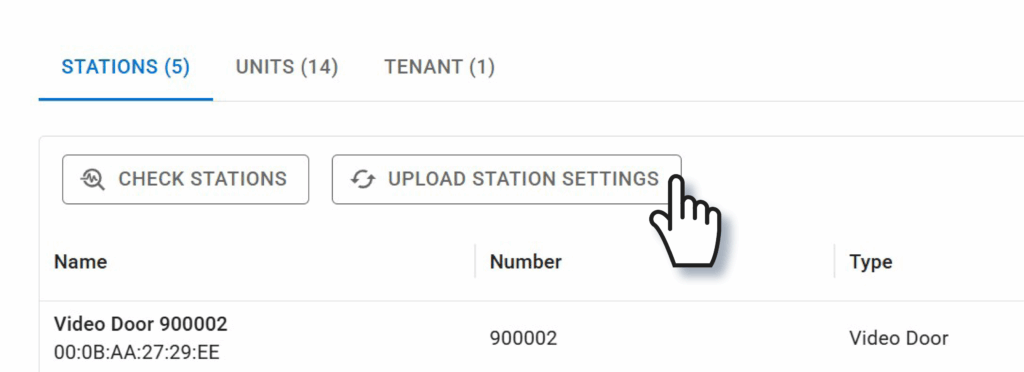
If they pass the checks, click Upload Station Settings. Wait for the upload process to complete.
After this step, the tenants will be fully removed from the system.
Note: AiphoneCloud and Remote Management are dynamic services, and future updates may change the appearance of some items.
Tip: AiphoneCloud and Remote Management are always being improved, so the interface may appear different than in these screenshots.
Each IXG mobile app, answering station, and entrance station has an address book. The default settings depend on the type of system being configured.
Commercial: All stations in the system are in each stations’ address book.
Multi-Tenant address books are determined by the device or IXG Mobile app’s Building and Unit assignment.
IXG-DM7 entrance stations can call Guard, Residential, and Commercial Units in the same building. IXG-MK guard stations and IXG Mobile apps in Guard Units can call any unit in the same building.
Stations and apps in Residential and Commercial Units can call other stations in their Unit, and any IXG-DM7 and IXG-MK stations in the same building.
To add or remove stations from an address book, click on the station’s name in the Stations menu.
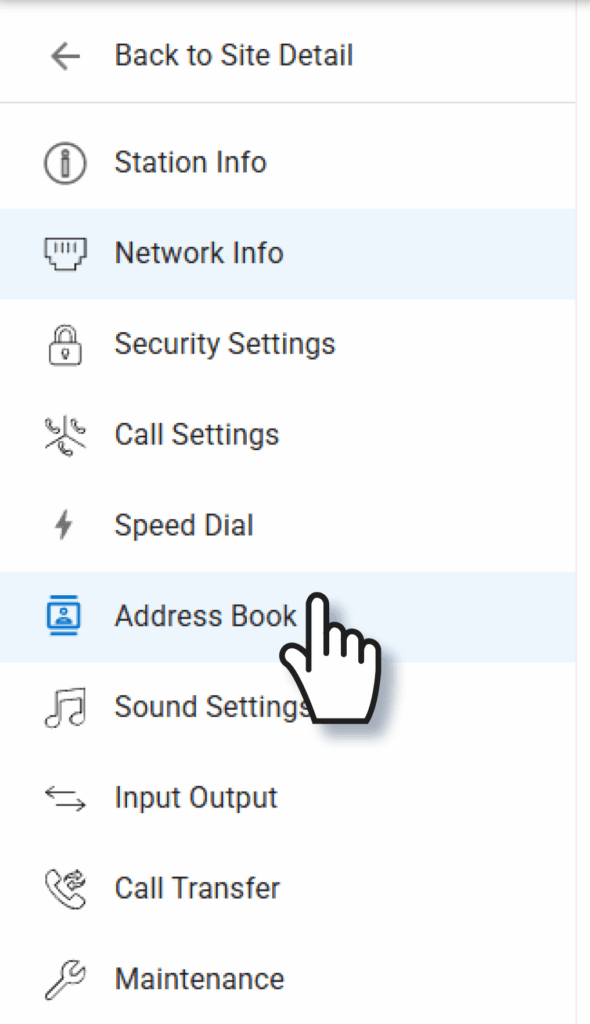
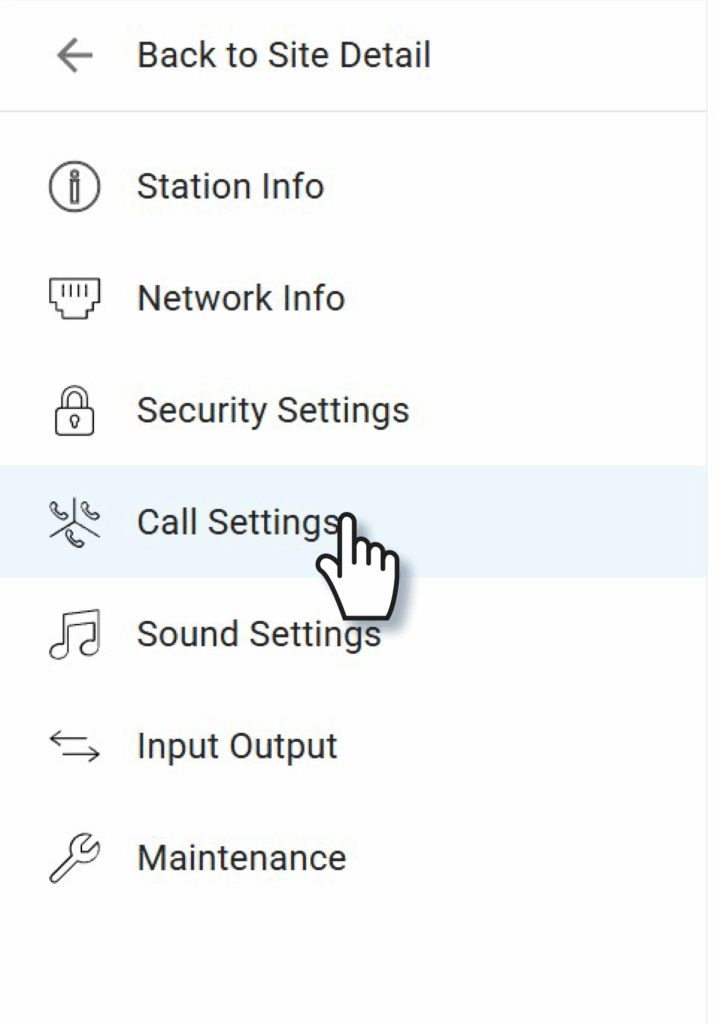
Click Address Book on the left menu.
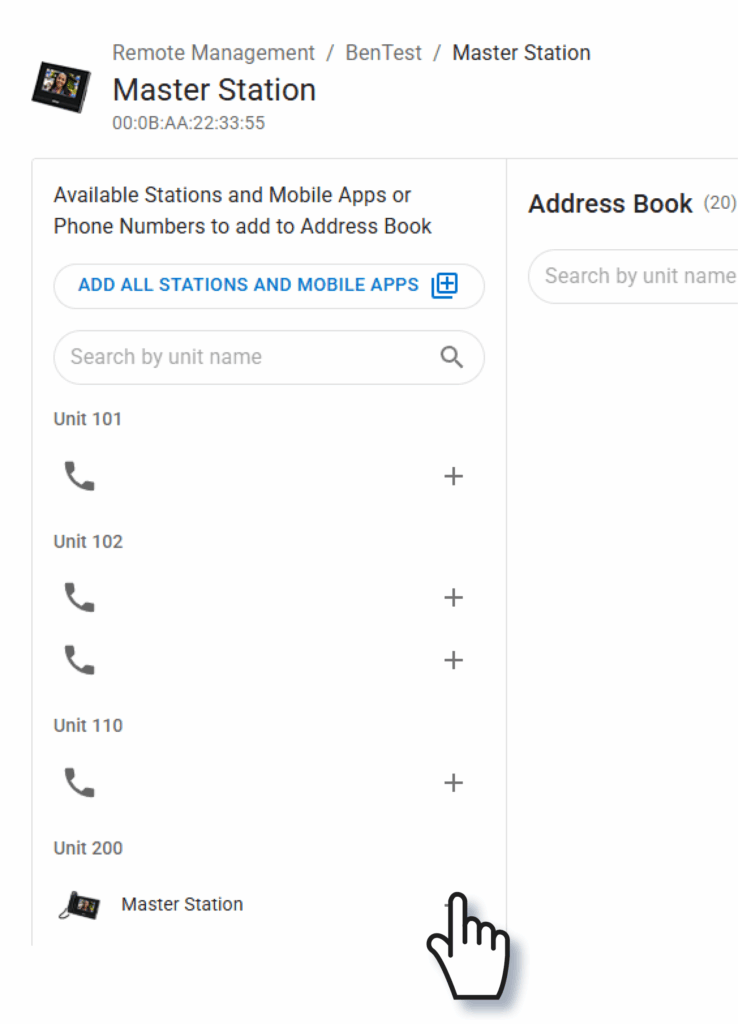
All stations can be added at once by clicking Add All Stations And Mobile Apps. To add stations individually, scroll through the units, stations, or phone numbers on the left and click the + symbol to select a station, phone number, or group of mobile apps.
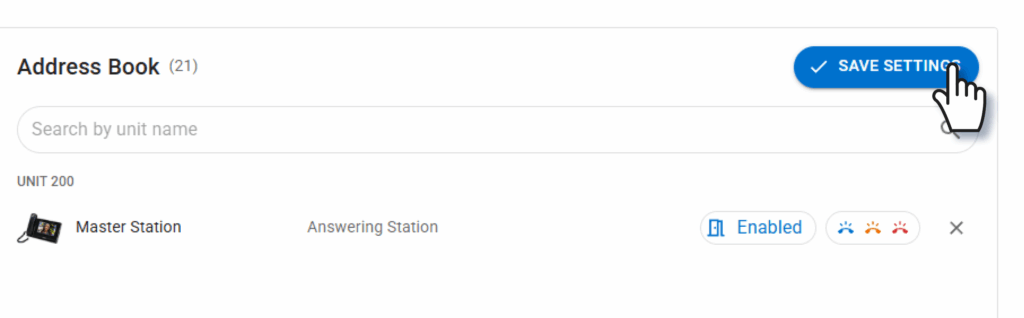
To remove a station that has already been added, click the X symbol to the right. Once the desired stations are in the address book, click Save Settings. Repeat this for all stations that need to have their address books adjusted.
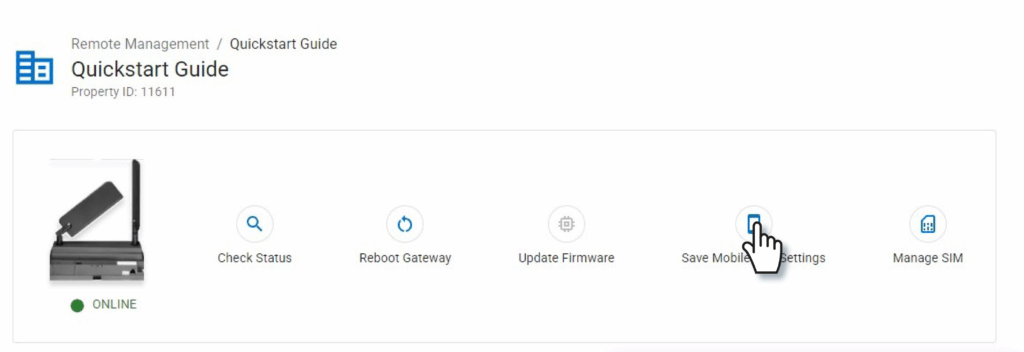
Click Back to Site Detail in the top left to return to the main page. To apply the settings to the stations and apps click Upload Station Settings. If mobile apps are used on the site, also click Save Mobile App Settings.
With that, the stations' address books will be updated.
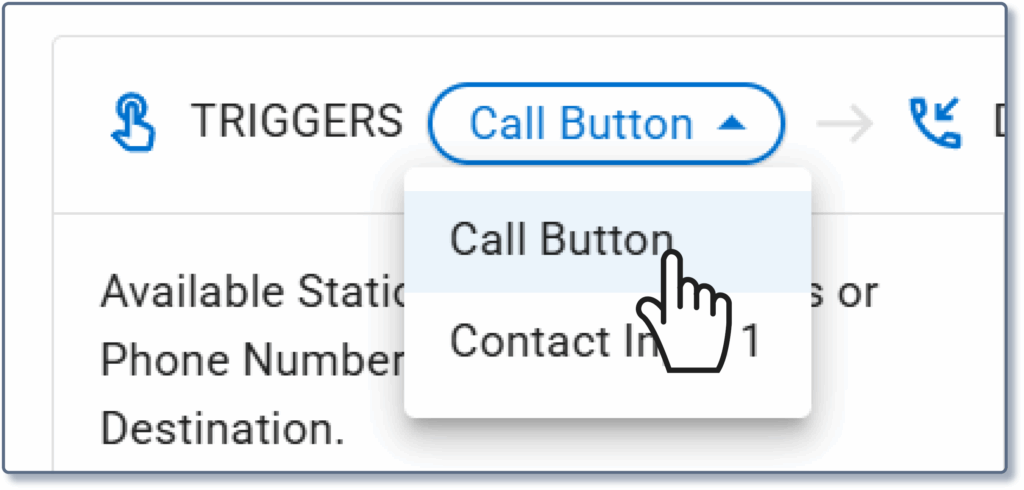
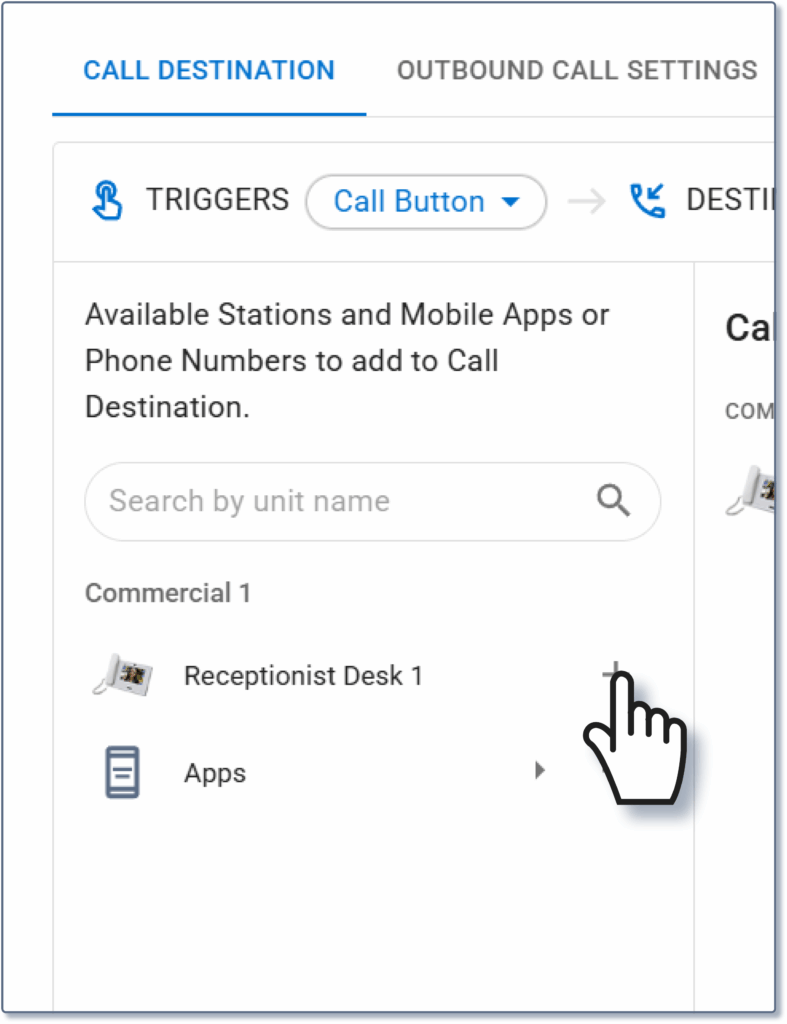
By default, the door station's built-in call button will be selected. If this call will be activated by an external button or other device, click the drop-down menu next to Triggers to select the appropriate input.
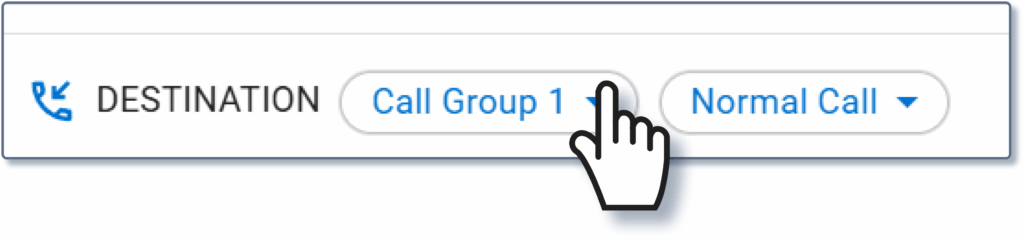
By default, the Destination will be set for Call Group 1 at a Normal Call priority. To adjust these, click the drop-down menus next to the word Destination.
Use the search bar or scroll through the list to locate the desired call destinations. Click the + button next to a destination to add it to the door's called stations.
Tip: Onlyone group of mobile apps can be added to the call group, and only one phone number. Up to 20 answering stations can be included.
Review the Call Destination list to the right. To remove a station, click the X symbol next to it. Once everything is configured, click Save Settings to finalize the settings.
Click Back to Site Detail in the top left to return to the main page. Repeat the previous steps for each door station to be configured.
To apply the settings to the stations and apps click Upload Station Settings. If mobile apps are used on the site, also click Save Mobile App Settings.
With this, the stations will be able to communicate with each other as configured.
Tip: AiphoneCloud and Remote Management are always being improved, so the interface may appear different than in these screenshots.
Call transfers allow calls to an answering station to be automatically forwarded to a group of stations and mobile apps. Call transfers are applied whether the incoming call originates from a door, entrance, or another answering station.
Before setting call transfers, make sure that these steps are complete.
Call Settings: Adjust the door stations’ call settings so that it calls the transferring station, but not the transfer destination. This does not need to be done for door stations in the system that should call both simultaneously and not be part of the transfer. (Link)
Address Book: Make sure that the calling door station and the transfer destinations are in the answering station’s address book. The calling station will also need to be in the address book of the transfer destinations to allow for door release. (Link).
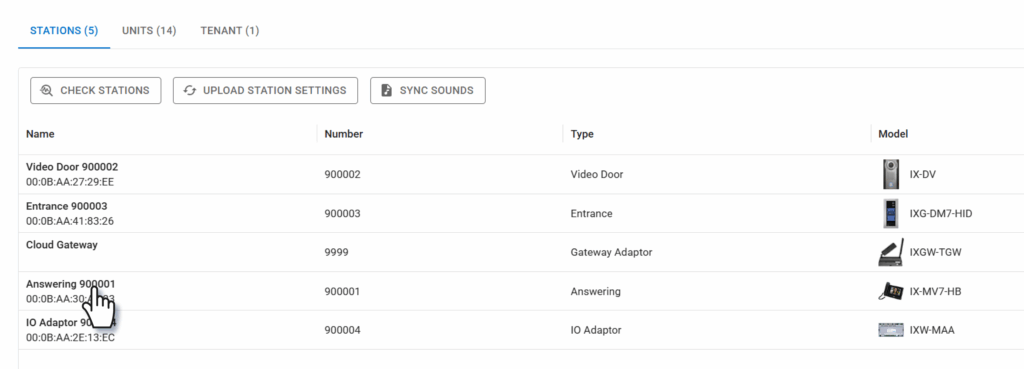
To get started, select the Stations menu on the main page and click on the station that will perform the transfer.
Tip: IX-MV7, IX-SOFT, and IXG-MK answering stations can perform transfers. IXG-2C7 and IX-RS stations cannot.
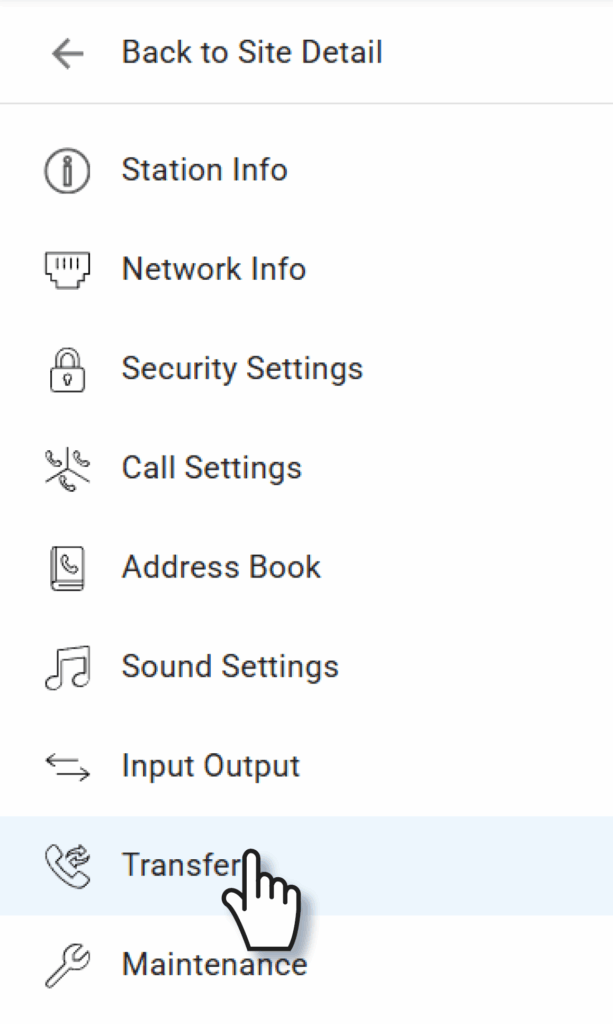
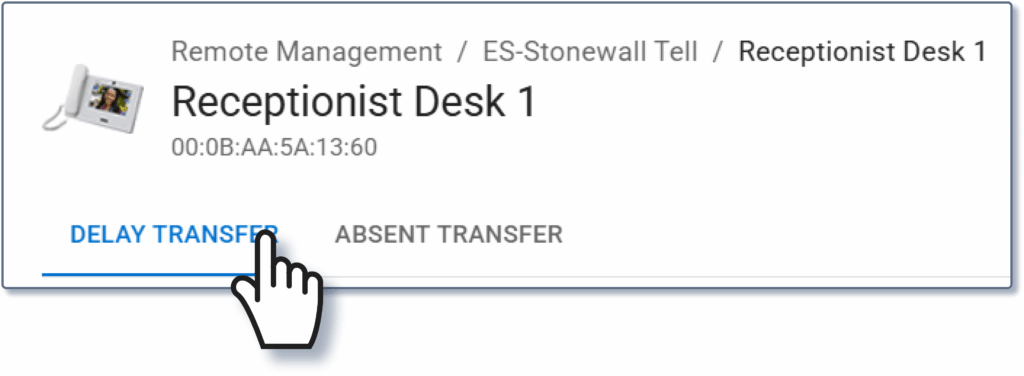
On the next page, click Call Transfer.
Remote Management supports two types of call transfers.
Absent Transfers: The user at the answering station can toggle the transfer on or off. When the transfer is on, incoming calls will instantly be forwarded to the transfer destination(s).
Delay Transfers: A call arrives at an answering station. After a certain length of time, the call is forwarded to the transfer destination(s).
Use the menu to select the type of transfer.
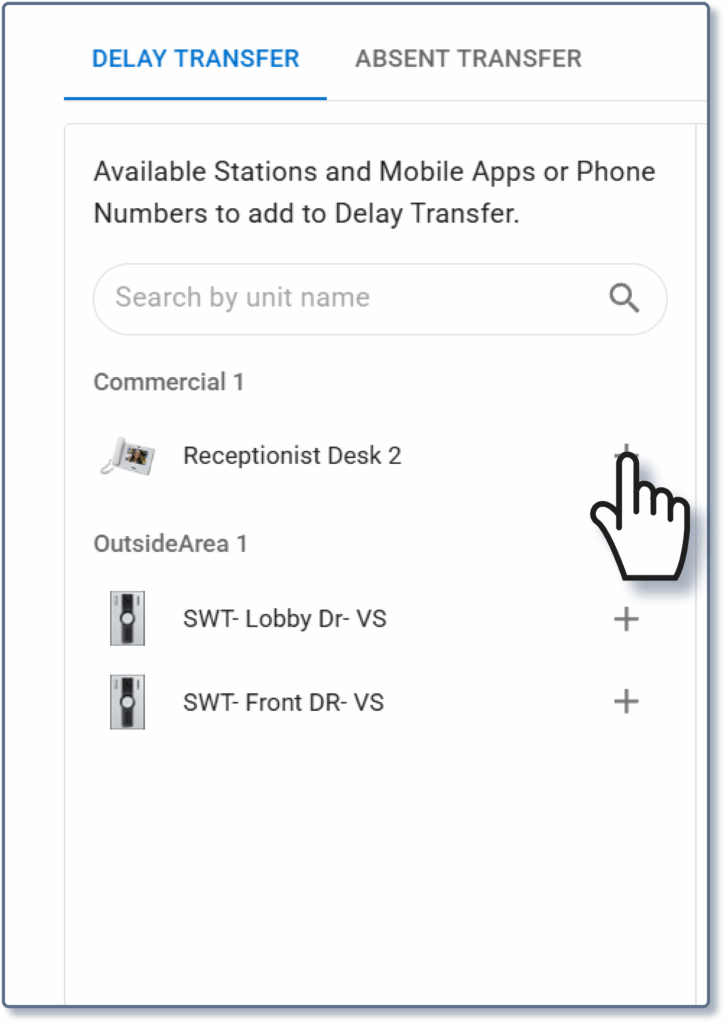
Stations and apps can be found using the search bars or by scrolling down the list beneath Mobile Group. Click the + symbol next to a station or group to add it to the transfer group. Up to 20 destinations can be set.
Tip: Only one group of IXG Mobile apps / Tenant Phone number can be added. Only one VoIP extension can be added. The rest will be answering stations.
After setting the transfer destinations, click the bar next to Enable (Type) Transfer to allow the transfer. If the type is a Delay Transfer, enter it in the appropriate field. To remove a transfer destination, click the X symbol in line with it. Once everything is configured for the transfer settings, click Save Settings.
Tip: IXG-MK guard stations transfer to entire units instead of individual stations. The steps are otherwise the same as on the IX-MV7 shown.
To clear the list, click Reset in the top right corner. Stations can also be removed from the transfer list by clicking the trash can symbol next to them.
Then, click Back to Site Detail in the top left to return to the main page. Repeat these steps for each answering station that will make transfers.
To apply the settings to the stations and apps click Upload Station Settings. If mobile apps are used on the site, also click Save Mobile App Settings.
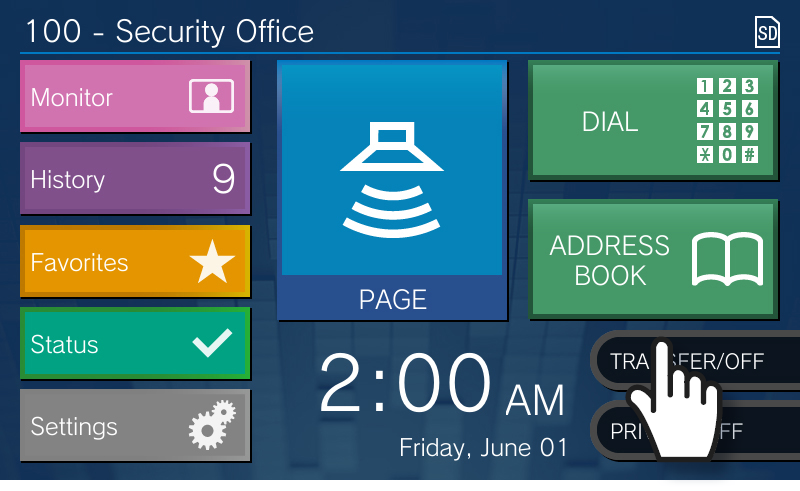
Delay transfers are active as soon as the upload is complete. Absent transfers are toggled on and off by pressing the Transfer button on the answering station’s home screen.
Both dealers and property managers on a Remote Management site are able to move out tenants.
To get started, navigate to https://aiphone.cloud/remotemanagement and log in with your credentials, including the branch's IXG Portal account, if prompted. If multiple sites are displayed, click the desired site from the list.
On the Site Detail page, click Units to display the unit list.
Click a unit from the list. This will open up a new page.
Under the Tenants submenu, the site’s tenants will be listed. Click Move Out.
A pop-up window will appear, explaining what information will be lost once the tenant is moved out. Click Move Out Tenants to confirm.
This will remove the tenant from Remote Management, but the settings will need to be applied to the IX | IXG Series stations. Click Back to Site Detail.
Click Check Stations to confirm that the stations are online and able to be accessed by AiphoneCloud.
If they pass the checks, click Upload Station Settings. Wait for the upload process to complete.
After this step, the tenants will be fully removed from the system.
Note: AiphoneCloud and Remote Management are dynamic services, and future updates may change the appearance of some items.
Tip: AiphoneCloud and Remote Management are always being improved, so the interface may appear different than in these screenshots.
Overview
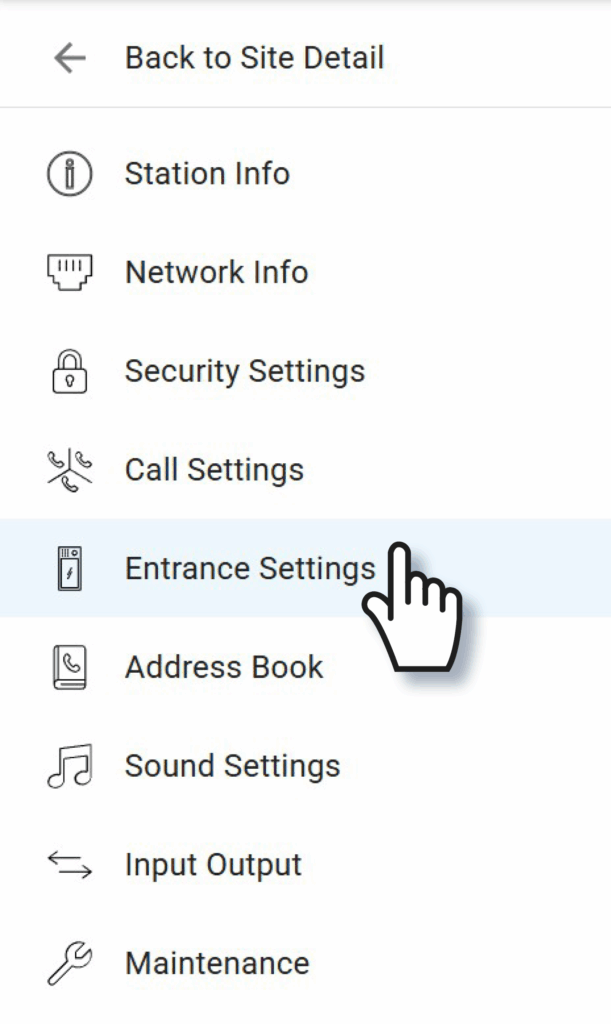
IXG-DM7-HIDA entrance stations have a variety of options that can be utilized by guests. To begin configuring a station, click on its name in the Stations section.
Click Entrance Settings to display the options.
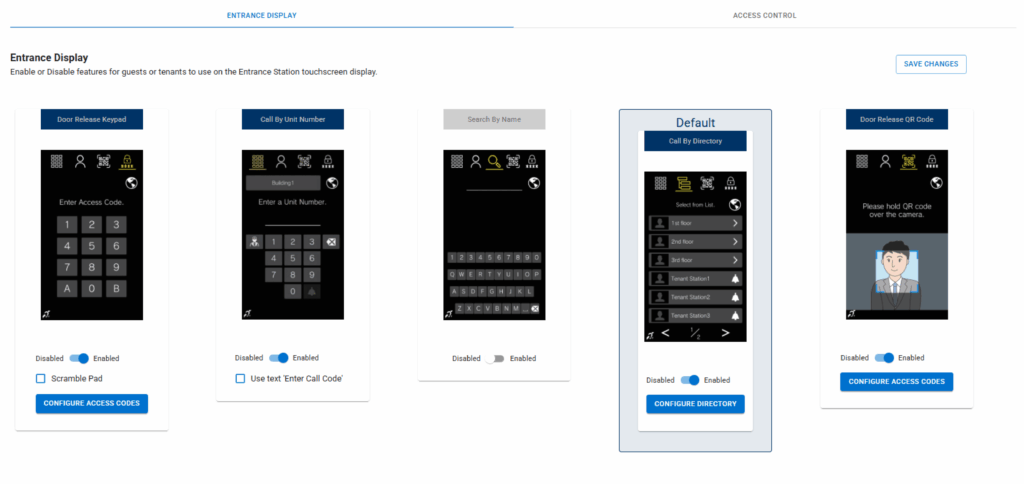
There are five features available:
Door Release Keypad: Allows residents to enter a code to unlock the door.
Call By Unit Number: Call a unit by entering its number.
Search By Name: Type in a resident or unit name to find the unit to call.
Call By Directory: Displays an individual call button for each unit.
Door Release QR Code: Residents can send visitors a QR code to scan to unlock the door
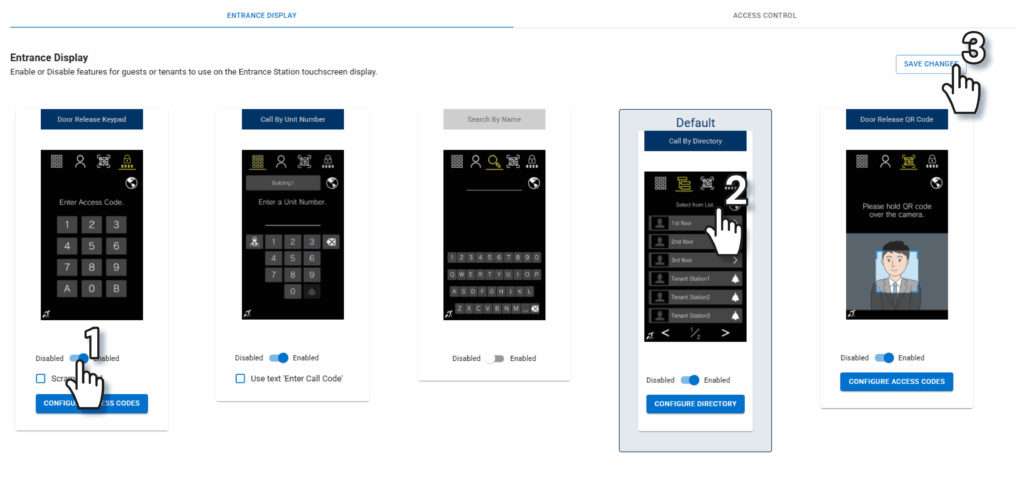
For each feature, click the blue slider beneath to enable or disable it.Click anywhere else in the box to set an enabled feature as the default view.
Tip: A view must be enabled before configuring its settings.
Two features have additional options that can be configured.
Door Release Keypad: Enable or disable Scramble Pad. This shuffles the numbers each time the keypad is displayed, making it more difficult for observers to guess the codes.
Call By Unit Number: Change the text to display “Enter Call Code” instead of the regular title. This does not change the functionality in any way.
Once all settings have been adjusted, click Save Changes in the top right. The settings will not be pushed to the station until they are uploaded in the last step in this article.
Configuring the Directory
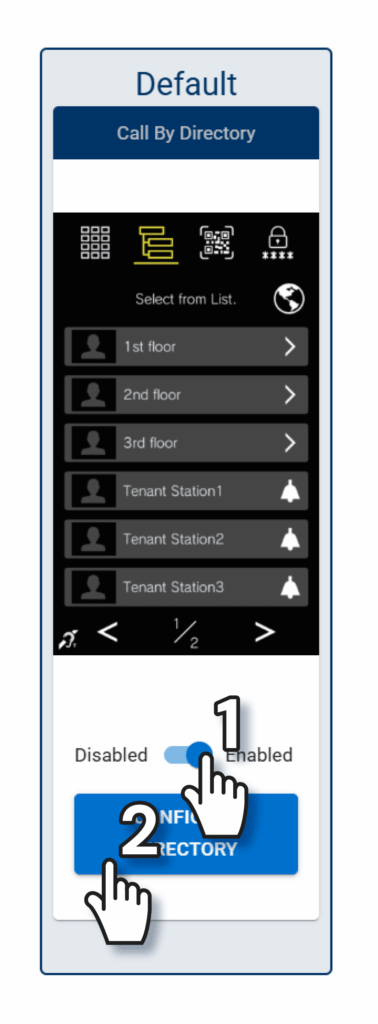
From this page, enable Call By Directory if it hasn’t been yet, then click Configure Directory.
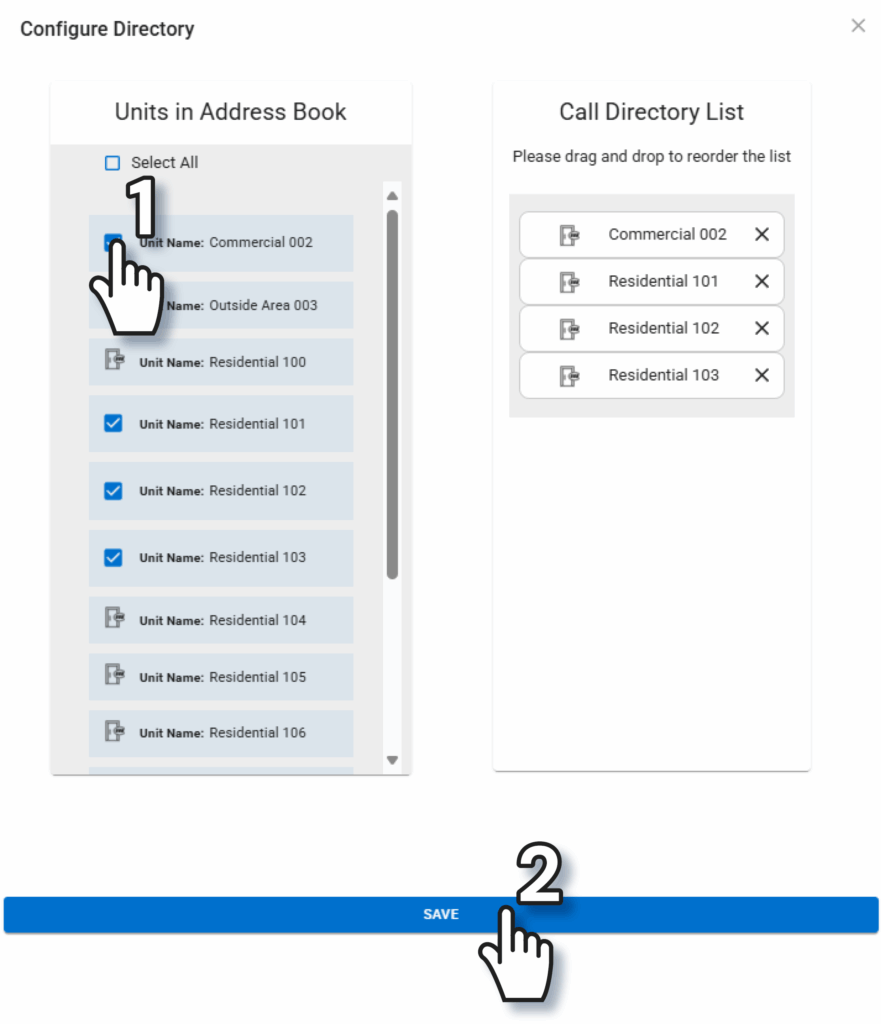
A pop-up window will appear, showing the available units in the station’s address book. Either click Select All or click the individual units to add them to the Call Directory List to the right, or click the X symbol next to a unit to remove it. The units can be reordered in the Call Directory List by dragging and dropping them. Once everything is configured, click Save.
Configuring Access Codes
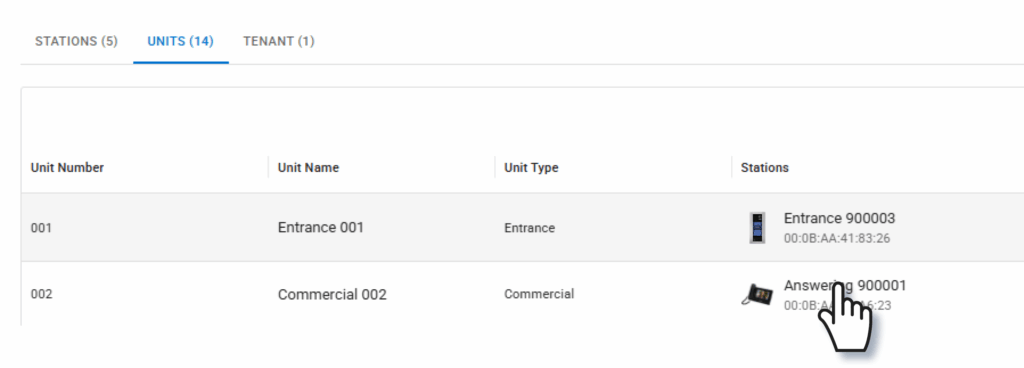
To set codes for the keypad or adjust QR code settings, navigate back to the main page by clicking the back arrow in the top left corner. From the main screen, click Units. Select the desired unit.
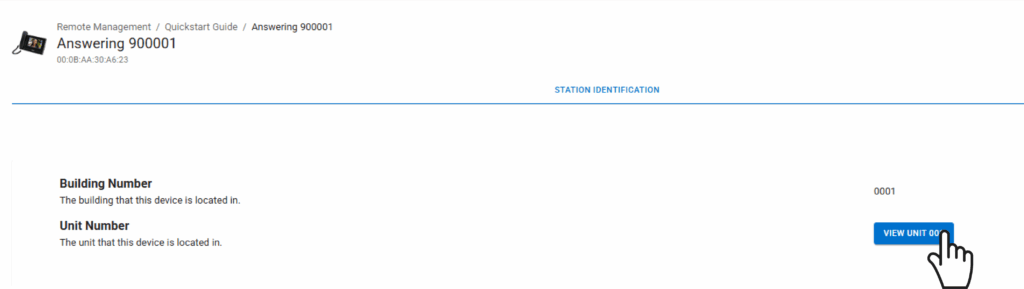
Click View Unit to the right.
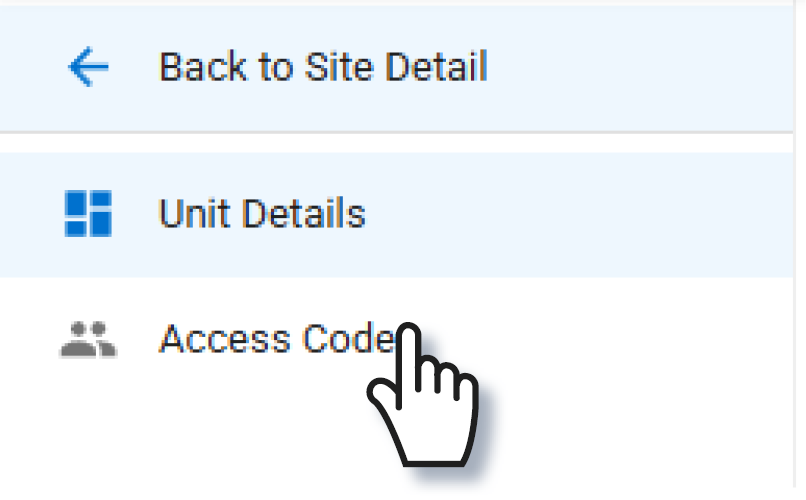
Click Access Codes to the left.
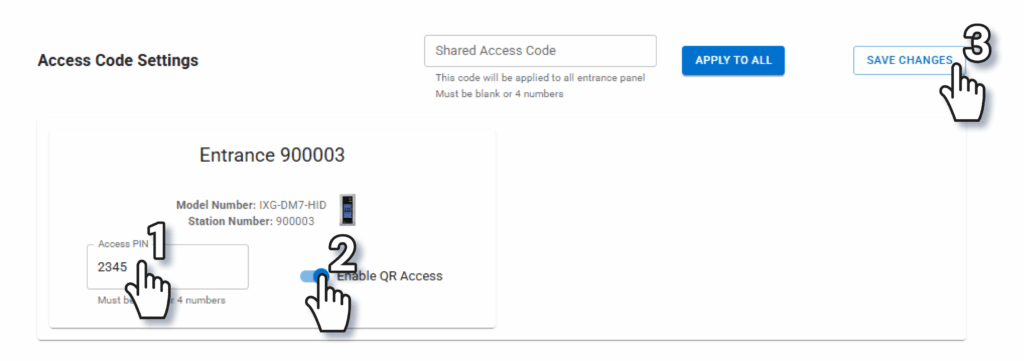
This page will display every entrance station in the unit’s address book. One code can be applied to them all by entering it in the Shared Access Code bar and clicking Apply To All. Otherwise, enter them in the section for each individual station.
To allow mobile apps in the unit to send Guest Passes to visitors, click Enable QR Access under the entrance station.
Tip: No matter how many tenants, stations, or mobile apps are in a unit, each unit is only assigned one shared code.
Once settings are finished, click Save Changes. Navigate back to the main page and repeat these steps for each unit.
Uploading Settings
To apply the settings to the stations and apps, click Upload Station Settings on the main page. If mobile apps are used on the site, also click Save Mobile App Settings.
With this, the entrance stations will be ready to use.