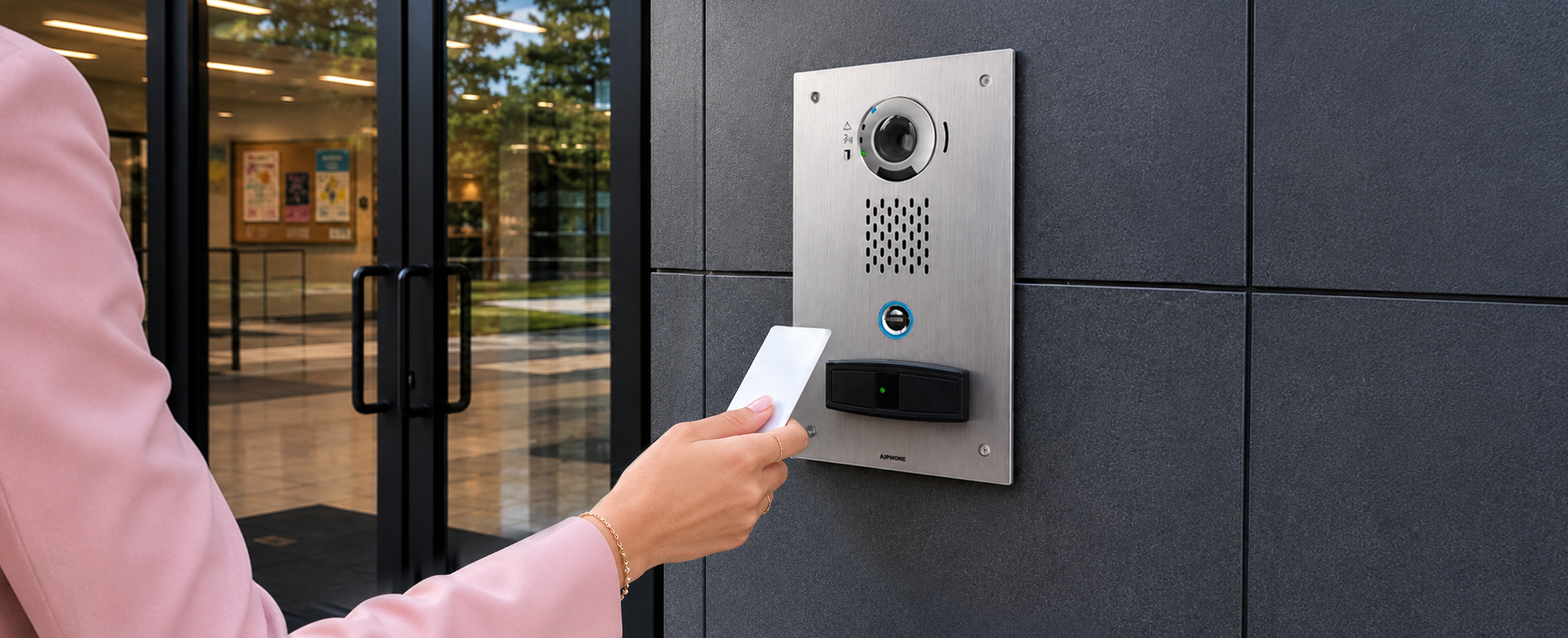
An access control system serves as the bedrock of a secure learning environment. It helps administrators manage entry points, protect private areas, and respond to changing security needs. However, outdated systems create several challenges. These can include limited visibility into who is entering schools along with increased administrative burdens and maintenance costs.
By improving these systems, administrators can create a stronger approach to campus safety. This guide will explore common access control issues, major considerations for choosing a new system, and a plan for achieving a cost-friendly security solution.
The Importance of School Security Access Control Systems
In academic settings, access control protects students, staff, and visitors. It regulates building entry based on permissions set by school administrators. This puts a stop to unauthorized individuals walking into restricted areas. Access control also expands the observability of campus activity, including monitoring and managing entry points across multiple buildings.
Without access control, schools face serious risks. The possibilities of intrusions leading to vandalism and violence are heightened. There is less trust from the population within, serving as a distraction against what matters most: learning, community, and academic progress.
Common Issues with Access Control in Schools
Disorganized Security Structures
When a security system lacks uniformity, disorganization is the result. Outdated card readers, the use of physical keys, and standalone keypad locks create gaps that make it easy for unauthorized people to enter a school building. Rather than using one all-encompassing door access control system, many schools rely on a fragmented mix of old and new technologies. This approach leaves staff struggling to manage permissions, track who is present, and respond quickly during the event of a crisis.
Absent Emergency Notification and Lockdown Capabilities
Outdated or incomplete access control systems leave schools vulnerable during emergencies. The absence of integrated notification and lockdown functions block safety and preparedness. In high-stakes situations where intruder threats, natural disasters, and medical emergencies take place, every second counts. Without modern solutions, a school can’t promise an organized, instantaneous response to social or environmental dangers
Operational Inefficiency
Administrators rely on their access control system to handle routine but critical tasks: managing schedules, issuing or revoking credentials, replacing lost cards, and granting temporary visitor access. While these processes should be quick and straightforward, many systems fall short. Reviewing entry histories becomes time consuming; everyday tasks require excessive attention. To master software that performs access functions, prolonged preparation and learning is required, usually with significant interference from IT experts. The overall impact is a waste of valuable time and energy on confusing interfaces that don’t provide clear, to-the-point usage.
Choosing the Right School Access Control System
Usability and Software Features
To remedy inconvenient handling, administrators should look for a system with simple database migration, intuitive operation, and independent access control management free from constant reliance on IT support. Aiphone’s AC Nio meets these requirements by providing a web-based dashboard that users can personalize with shortcuts and widgets to save time. Devoid of inflated menus and hyper-technical navigation, administrators can carry out any task without getting lost or distracted. Furthermore, permissions are granular, meaning that specific, detailed controls can be set depending on the distinct needs of each school building.
Open Architecture
For a system to be comprehensive, open architecture is a requirement. This includes supporting multiple credential types, like cards, fobs, and PIN numbers. It also includes operating using industry standards like OSDP, Wiegand, and APIs—protocols, wiring, and software that installers frequently come across when implementing new access control.
AC Nio stands out in its accommodation of open architecture. It is especially adept at integrating with third party security components. This means it can take on already-existing hardware and software without the need for a school to eliminate cards and fobs, intercoms, wiring, and other lingering security system aspects. The effect is lowered costs and implementation time, as new infrastructure does not need to be purchased or installed.
Total Cost of Ownership
Cost includes the initial investment required to assemble an access control system, along with the continuing expenses associated with operation, maintenance, upgrades, and future scalability. Considering these long-term charges help schools review the true value of a system and avoid choosing a solution that may require frequent repairs or pricey adjustments.
Because Aiphone is committed to helping schools create safer environments, solutions across a range of needs and budget levels are available. While keeping upfront and ongoing costs manageable, schools can choose the access control and infrastructure options that best fit their priorities.
How to Build a Cost-Effective Access Control Solution
Start with Intercoms
To create an access control solution that aligns with every school’s independent needs, administrators should begin by evaluating their intercoms. As the first line of defense, intercoms screen visitors before access is granted, making them a critical component of any security strategy. If intercoms are already in place, they should be evaluated based on functionality, reliability, and capacity to integrate with an access control system. If a school has yet to install intercoms, administrators should select a system type and survey locations for deployment.
For any school size, Aiphone recommends its signature IX | IXG Series. This IP solution weaves large-scale connectivity with centralized management through AiphoneCloud. For cost-effective analog alternatives, the JO and JP Series are also trustworthy options. They can be better suited to smaller settings and offer classic video capabilities alongside wired communication.
Leverage Existing Infrastructure and Modernize in Phases
When evaluating intercoms, administrators should also review other hardware and software. Card readers, credentials, locks, existing cabling and network infrastructure, and other related components fall into this category. If certain security building blocks have yet to be installed, they should be included in the project budget. For what is already in place and operating smoothly, AC Nio can absorb outside infrastructure into one collective system. This flexibility can significantly reduce upgrade costs while extending the value of present investments.
For schools with limited budgets, a phased modernization approach can make upgrades more accessible. Rather than replacing everything at once, schools can prioritize whatever improvements their buildings call for at a given time. Because AC Nio is a dynamic tool, schools can retain infrastructure while updating at a pace that respects their budget.
Prioritize User-Friendly, Scalable Access Control
AC Nio is the key to simple entry management for schools. Operating either on-premises or remotely, this software acts as a headquarters for multiple operations like assigning permissions, tracking entries, and integrating with new or existing hardware. Being both a customizable and easily navigable interface, AC Nio saves time and money by reducing the need for physical servers and repeated IT interference. It is, ultimately, what allows schools to administer access control while bringing down the price tag on ownership costs.
Decide on Cloud-Based Deployment
If administrators choose to deploy access control in the cloud, they eliminate the need for on-site servers and system maintenance that would otherwise fall on them. The outcome is reduced hardware expenses, burden on internal IT staff, and on-site service and travel costs. Additionally, cloud-based access control makes expanding oversight across multiple buildings possible without added infrastructure.
Aiphone’s Approach to School Access Control
Aiphone is uniquely positioned to help schools implement comprehensive access control solutions. Because of a fierce dedication to the safety of children, teachers, and additional staff, schools trust us to safeguard thousands of buildings across North America. In turn, we provide schools with the resources needed to create strong security strategies. Our industry experience, combined with our commitment to creating safer learning environments, makes us a reliable partner for administrators seeking modern, cost-effective, and proven access control.
Frequently Asked Questions
How can cloud-based access control reduce school IT and maintenance costs?
Cloud-based access control reduces IT and maintenance costs by eliminating the need for on-premises servers and reducing the hardware and upkeep required. It allows administrators to manage updates, users, and system settings remotely, lowering the burden on additional staff and facilitating long-term maintenance.
How can a school district stay on budget if they have multiple buildings?
Schools can choose either on-premises or cloud-based deployments from Aiphone, depending on their funding, strategy, and infrastructure. A cloud-based solution reduces hardware expenses and simplifies system management across multiple locations. Administrators can oversee access permissions, users, and security updates from a centralized platform. An on-premises solution allows schools to leverage their infrastructure while adhering to privacy concerns and data governance.
Can access control entries be customized for different security levels?
Aiphone access control allows schools to customize entry permissions based on individual roles and security needs. Administrators can create user groups, assign access levels, and establish schedules that determine who can enter specific areas and when. This ensures that staff, administrators, and visitors have the appropriate access without granting unnecessary permissions.
How do I choose the best intercom system for my school?
Aiphone offers three solutions that are compatible with academic environments. The IX | IXG Series is best for large campuses, supporting up to 9,999 door stations. This IP option includes clear, two-way video communication and accommodates a wide array of integrations. The JO Series is a hardwired solution. With mobile app support, it incorporates standard intercom capabilities on a smaller scale than the IX | IXG Series. Similarly, the JP Series is another analog solution that acts as a middle ground between the two. It can thrive in larger spaces and is commonly implemented in long-standing buildings and historic schools for its ability to make use of existing wiring.