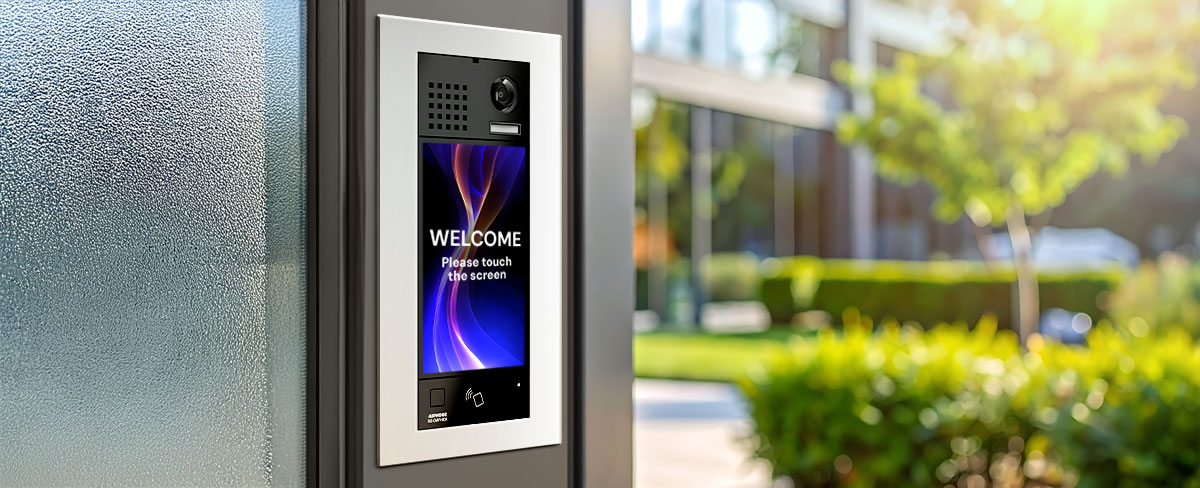
Building a comprehensive physical security system is not an easy act to juggle. There are many components to cross off the list: cameras, access control, emergency notification systems, and more. But one element stands out above the rest as the first impression and the first line of defense: the intercom.
Why Intercoms Should Lead Your Physical Security Design
Intercoms are arguably the most interacted with component of a physical security system. And yet it is often overlooked both in the design process and in daily life, even when it’s touched and talked into countless times per day.
Visitors, residents, tenants, and staff use it constantly to request access or let themselves in. It’s the first point of contact and first impression for anyone new to the building and should have a thought and effort behind it.
Choosing the intercom early into the security system design process allows more space for a higher quality, reliable intercom that will leave a good impression on those who use it. It helps to avoid interruptions in service, keeping facilities safer, while avoiding long-term costs.
The intercom can’t be the last thing you look at, because it will be the first complaint you get.
Sean Peterson
Director of Product and Marketing
How Modern IP Intercoms Function as Scaled Security Systems
Today’s video IP intercoms are comprehensive security systems on a small scale. They have monitoring and recording capabilities of IP cameras. They serve as access control. They can also allow for instant communication with security or emergency personnel.
For small scale security needs, like apartments or offices looking to secure one or two exterior doors, this can be enough. But for larger scale security systems, these capabilities can become underutilized if the intercom is an afterthought.
“Many people think of intercoms as simply a tool for granting access at the front door, but they offer much more functionality,” said John Hemp, Director of Sales, Mid-Atlantic and Midwest Regions at Aiphone.
Prioritizing the intercom and its functionalities when planning allows for a more efficient system: a door station with a built-in proximity reader for access eliminates unnecessary extra components; and choosing the intercom’s location at an entrance before cameras can eliminate redundant video feeds.
Proactive Security in the Face of Incidents
Cameras and access control play a critical role in tracking and managing movement throughout a building or campus. Intercoms serve a different function. They introduce human decision making and real-time interaction to the moment when a call button is pressed. Whether the call is answered by a resident, a receptionist, or a security guard, access is not granted until a human decision is made.
That same interaction becomes especially important during emergencies. Intercoms become a direct line to security or first responders when other communication methods are unavailable. This ability to verify, communicate, and act in real time is what makes the intercom a proactive element within the broader security system.
Why Intercom-First Design Improves Security
Choosing an intercom too late into the system design process opens the door to avoidable problems: incompatibility, loss of features, and less capability for future expansion.
“The number one call in this category of support calls is that the customer loves the product and the system, but they want to roll over to mobile, add another master station, or add a transfer to phone system. If they’ve picked a non-integrable system, they’ll need to rip it all out and replace it,” said Peterson.
Compared to other aspects of a physical security system, the intercom is far more expensive to replace. Choosing the right model and installing necessary components is key to ensuring end users are happy, and no one is left frustrated.
Choosing the Right System for Longevity, Flexibility, and Success
With a fully thought-out, long-term intercom system installed from the beginning of the project, more options are open down the road. Even if not all features are available the first day the system turns on, ensuring their functionality and compatibility down the road is crucial.
Physical infrastructure will inevitably change over time. Systems may be expanded to accommodate more doors or answering stations may be changed, and it’s important to select an intercom with a high station capacity capable of keeping up with those changes.
Cloud-based management and deployment have been trends in physical security over the last few years, and it’s important to have those possibilities open from day one. It may require installing additional components or activating licenses, but it allows the end user to enable future feature deployments or changes without the physical presence of a technician.
Shifting Priorities for a Solid Future
Even though it may not be the first component chosen when designing a physical security system, it’s critical for day-to-day operations to run smoothly. When its capabilities are overlooked or it gets sidelined for other components, it doesn’t live up to its full potential. Considering the intercom sooner can avoid that altogether, and make lives easier for end users, integrators, and installers.